Introduction
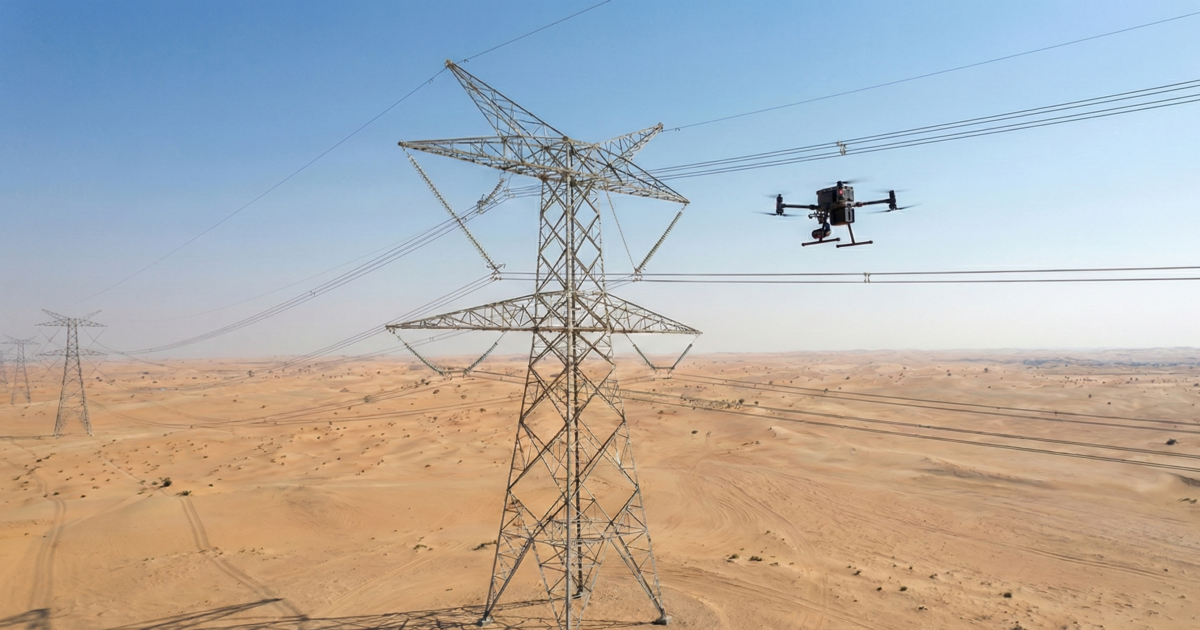
Maintaining high-voltage overhead lines is one of the most dangerous and logistically complex tasks in infrastructure management. Traditionally, this involved power shutdowns, expensive helicopter flyovers, or high-risk manual climbing.
With the advent of specialized drone sensors, utility companies can now perform comprehensive health checks of towers, insulators, and conductors while the lines remain live. For a maintenance company to adapt to this technology, they must integrate visual, thermal, and electromagnetic sensors into a unified inspection workflow.
1. The Challenges of Power Line Inspection
Power lines present a unique set of hazards for drones:
- High EMF (Electromagnetic Fields): Can scramble GPS and compass data.
- Thin Conductors: Difficult for standard obstacle avoidance sensors to detect.
- Scale: Utility grids cover thousands of kilometers, necessitating efficient flight operations.
2. Specialized Equipment and Sensors
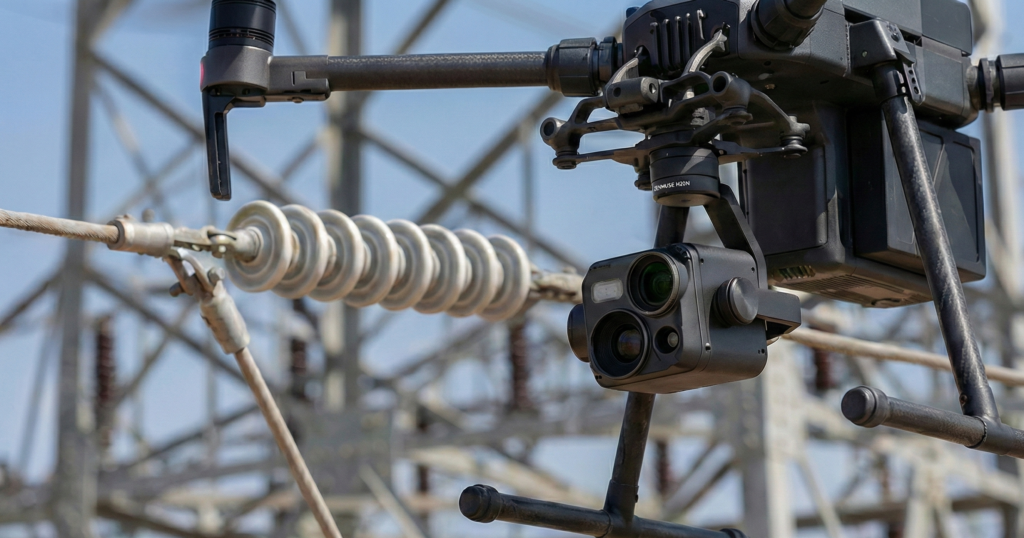
To successfully inspect high-voltage lines, a company needs a “Triple-Sensor” approach.
The Drone: DJI Matrice 350 RTK
The M350 is essential because of its RTK (Real-Time Kinematic) precision. By using RTK, the drone can maintain a steady position even when surrounded by the massive magnetic interference of a 400kV line.
The Sensors:
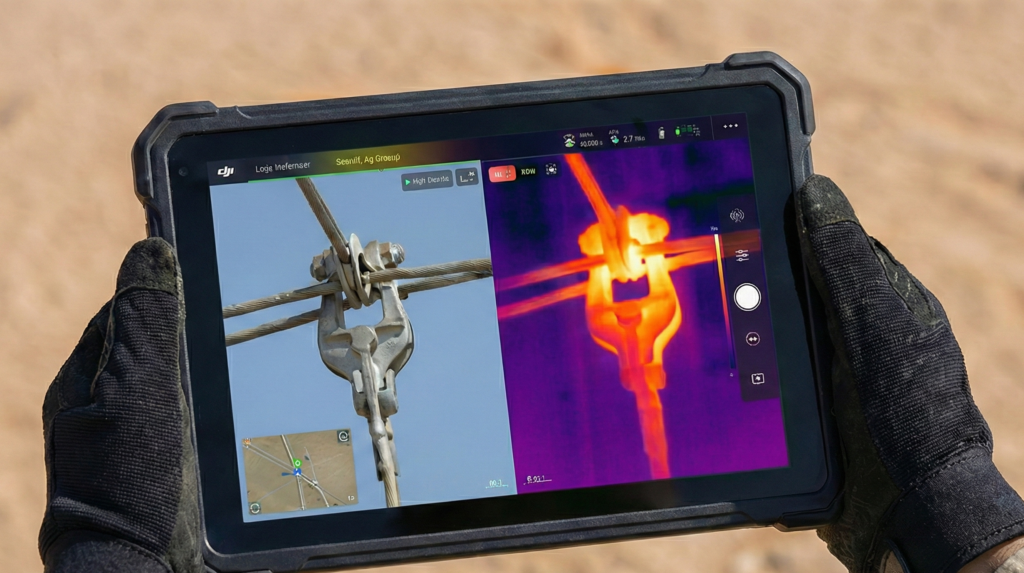
- High-Resolution Visual (Zenmuse H30T): Used for “Tiers 1 & 2” inspections—identifying rusted bolts, bird nests, or chipped ceramic insulators from a safe distance using a 34x optical zoom.
- Thermal Imaging: Crucial for identifying “Hot Spots.” A loose connection or a failing insulator will generate heat before it fails. Thermal drones can spot these anomalies from 20 meters away.
- High-Voltage Leakage Detectors: Some advanced payloads can detect “Corona Discharge”—a phenomenon where the air around a conductor becomes ionized, indicating a failure in insulation that visual and thermal cameras might miss.
3. The Software Workflow: From Tower to Report
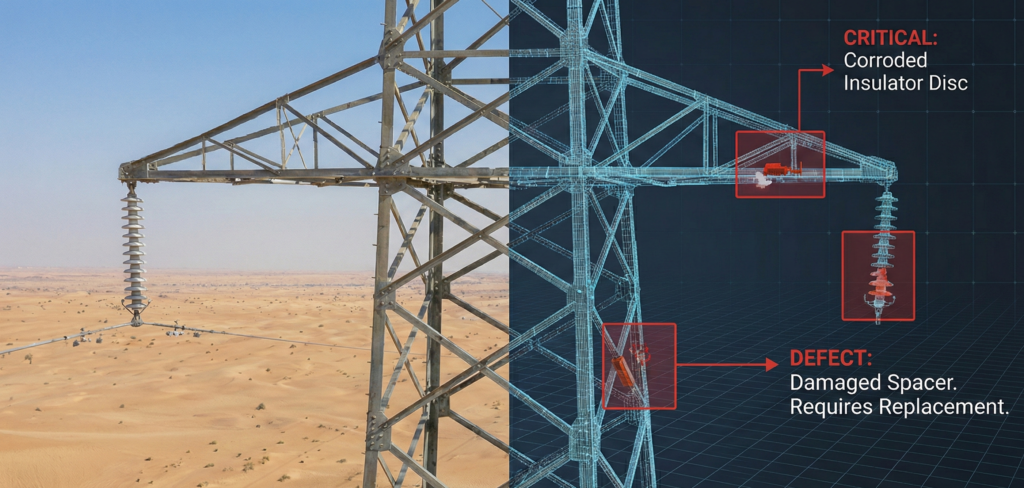
Efficient maintenance requires more than just videos; it requires data that can be used by repair crews.
- Automated Flight Routes: Using DJI FlightHub 2, pilots can create “Waypoints” for every tower. The drone will automatically fly to the exact same position every 6 months to take a “Before and After” comparison photo.
- AI Defect Recognition: AI models can scan thousands of insulator photos and automatically flag those with cracks or contamination (sand/salt buildup).
4. Manpower and Expertise
- Advanced Pilot: Must be trained in “Close-Proximity Flying” near energized infrastructure and understand EMI (Electromagnetic Interference) safety protocols.
- Electrical Engineer: A technician who can interpret thermal gradients and identify the severity of a “Hot Spot.”
- Safety Officer: To manage ground safety and coordinate with grid control for live-line flight approvals.
5. Summary Checklist for Utility Inspection Adaptation
| Requriement | Solution |
|---|---|
| Drone Platform | DJI Matrice 350 RTK (Anti-Interference Mode) |
| Primary Payload | Zenmuse H30T (Zoom + Thermal + Laser) + Corona detection system using UV ZH480-UAV-S |
| Navigation | D-RTK 2 Mobile Station (For centimeter precision) |
| Software | DJI Terra (3D Modeling) + FlightHub 2 (Management) + Customized GIS Solutions + Customized AI Detection software for findings |
| Manpower | EMI-Certified Pilot + Electrical Inspector |
Conclusion: Reducing Risk, Increasing Reliability
The goal of overhead line maintenance is to prevent the “Dark Sky” scenario—unplanned power outages. By adapting to drone-based inspections, utility companies in the UAE can monitor their grids more frequently, with higher detail, and at a fraction of the cost of traditional methods. Most importantly, it keeps workers safely on the ground.
Contact us today to learn how ZID can help you establish an overhead line inspection unit using the latest drone technology.
Internal Links: