Introduction
Building maintenance, particularly facade cleaning, has traditionally relied on manual methods involving scaffolding, rope access, or hydraulic platforms. These approaches, while proven, come with significant challenges including safety risks, time consumption, and operational disruptions. The emergence of drone cleaning systems represents a revolutionary shift in how we approach building maintenance.
This article provides an honest, comprehensive comparison between drone cleaning systems and traditional cleaning methods, helping facility managers and building owners make informed decisions about their maintenance strategies.
Traditional Cleaning Methods: An Overview
Scaffolding Systems
Scaffolding has been the standard approach for facade cleaning for decades. This method involves erecting temporary structures around buildings, providing workers with stable platforms for cleaning operations.
Advantages:
- Direct access to surfaces for thorough cleaning
- Workers can inspect surfaces up close
- Suitable for all building heights
- Well-established industry practices
Disadvantages:
- Significant setup and dismantling time
- High labor costs
- Safety risks for workers
- Disruption to building occupants
- Limited access in certain weather conditions
- High equipment and transportation costs
Rope Access (Abseiling)
Rope access, or abseiling, involves trained technicians descending buildings using specialized rope systems. This method is commonly used for high-rise buildings where scaffolding is impractical.
Advantages:
- Faster setup compared to scaffolding
- Lower equipment costs
- Access to difficult-to-reach areas
- Less visual obstruction
Disadvantages:
- Requires highly trained and certified technicians
- Weather-dependent operations
- Safety risks despite training
- Limited to specific building designs
- Higher insurance costs
- Slower cleaning process
Hydraulic Platforms (Cherry Pickers)
Hydraulic platforms provide elevated access using extendable booms mounted on vehicles. This method offers mobility and relatively quick setup.
Advantages:
- Quick deployment
- Good mobility around building perimeter
- Suitable for mid-rise buildings
- Less disruptive than scaffolding
Disadvantages:
- Limited height reach
- Requires significant ground space
- Weather limitations (wind restrictions)
- High equipment rental costs
- Traffic and parking considerations
- Limited access to complex building geometries
Drone Cleaning Systems: The Modern Approach
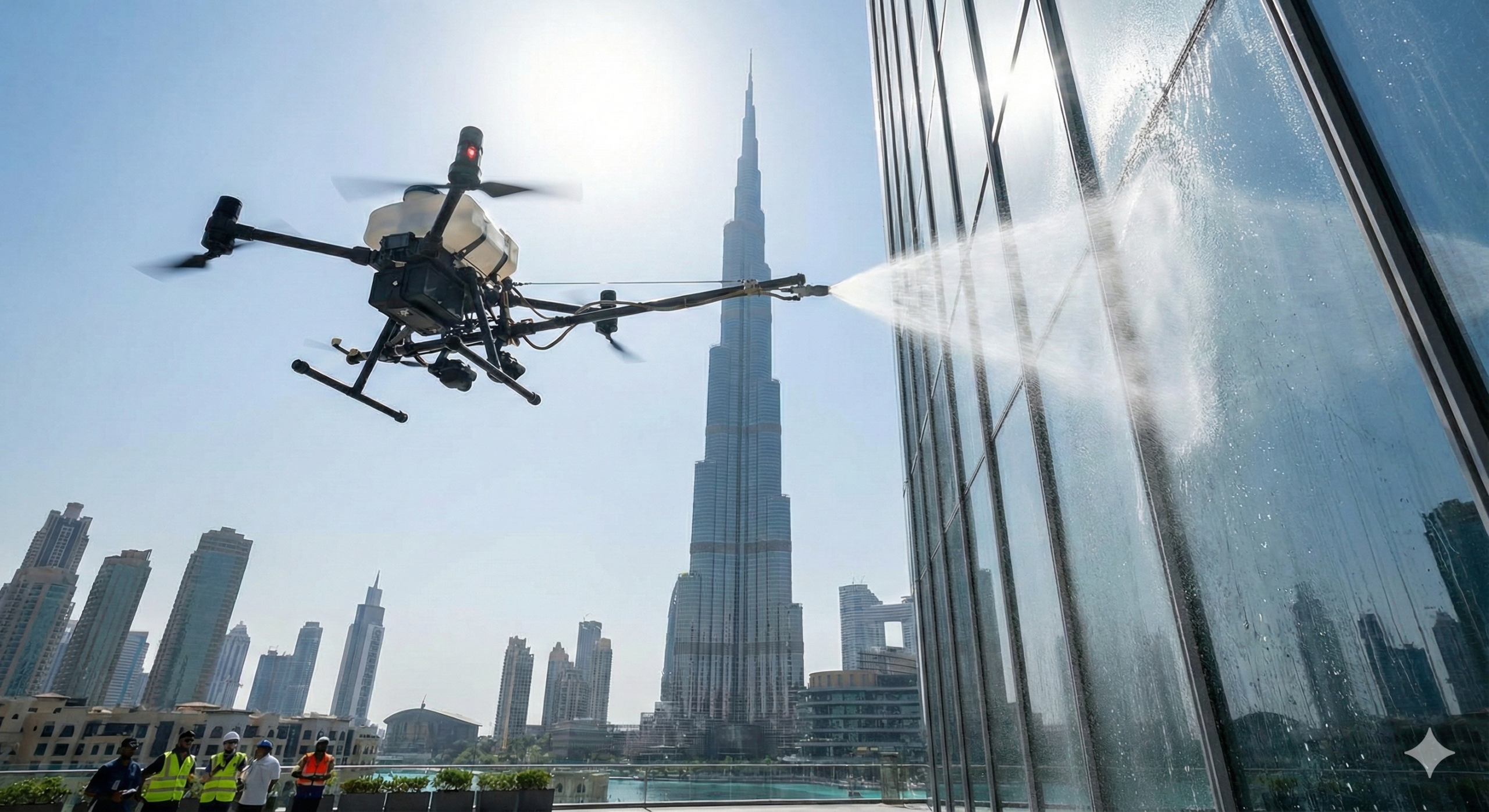
Drone cleaning systems utilize specialized unmanned aerial vehicles (UAVs) equipped with cleaning mechanisms, water tanks, and precision control systems. These systems can perform facade cleaning operations autonomously or under remote supervision.
How Drone Cleaning Works
Modern cleaning drones are equipped with:
- High-Pressure Water Systems: Delivering controlled water jets for effective cleaning
- Cleaning Brushes or Nozzles: For scrubbing and rinsing operations
- Precision Flight Control: Ensuring accurate positioning and coverage
- Safety Systems: Collision avoidance and emergency protocols
- Real-Time Monitoring: Live video feeds for operator supervision
Advantages of Drone Cleaning Systems
Safety Improvements
The most significant advantage of drone cleaning is enhanced safety. By eliminating the need for workers to work at height, drone systems dramatically reduce fall risks and workplace accidents. This is particularly important in the UAE, where building heights and extreme weather conditions can make traditional methods hazardous.
Time Efficiency
Drone cleaning systems can significantly reduce cleaning time. Setup is minimal—typically requiring only a ground control station and the drone itself. Operations can begin within minutes rather than days required for scaffolding erection. For large buildings, drones can complete cleaning operations in a fraction of the time required by traditional methods.
Cost Effectiveness
While initial investment in drone technology may seem significant, operational costs are substantially lower:
- No scaffolding rental or setup costs
- Reduced labor requirements
- Minimal disruption to building operations
- Lower insurance premiums due to reduced safety risks
- Faster project completion means lower overall costs
Minimal Disruption
Drone cleaning causes minimal disruption to building occupants and surrounding areas. Unlike scaffolding that can block views, access routes, and create noise, drones operate with minimal impact on daily operations.
Access to Difficult Areas
Drones excel at accessing areas that are challenging or impossible for traditional methods:
- Complex building geometries
- Overhangs and cantilevers
- Areas above occupied spaces
- Buildings with limited ground access
Environmental Considerations
Modern drone cleaning systems can be more water-efficient than traditional methods, with precise control over water usage and the ability to use specialized cleaning solutions more effectively.
Limitations and Challenges
Weather Dependencies
Like traditional methods, drone operations are weather-dependent. High winds, rain, or extreme temperatures can limit operations. However, drones typically have more flexible weather windows than scaffolding or rope access.
Regulatory Requirements
Drone operations in the UAE require proper licensing and compliance with GCAA regulations. Working with certified operators ensures all regulatory requirements are met.
Initial Investment
For businesses considering in-house drone capabilities, the initial investment in equipment, training, and certification can be substantial. However, partnering with professional drone service providers eliminates this barrier.
Technical Complexity
Operating cleaning drones requires specialized training and expertise. Professional operators ensure optimal results and safety compliance.
Honest Comparison: When to Choose Each Method
Choose Traditional Methods When:
- Very Small Areas: For spot cleaning or very small buildings, traditional methods may be more cost-effective
- Intricate Detailing Required: When detailed hand-work is necessary for delicate surfaces
- Extreme Weather: When weather conditions prevent drone operations
- Regulatory Restrictions: In areas with strict no-fly zones or operational limitations
Choose Drone Cleaning When:
- Large Surface Areas: Drones excel at covering large facades efficiently
- Safety is Priority: When minimizing worker exposure to height risks is critical
- Time Constraints: When rapid completion is required
- Minimal Disruption Needed: For occupied buildings or sensitive environments
- Complex Geometries: For buildings with challenging access requirements
- Cost Efficiency: When seeking to reduce overall maintenance costs
Real-World Considerations in Dubai and UAE
The UAE’s building landscape, characterized by high-rise structures and challenging environmental conditions, makes drone cleaning systems particularly valuable. The region’s commitment to innovation and safety aligns well with drone technology adoption.
However, it’s essential to work with certified, experienced operators who understand:
- Local weather patterns and operational windows
- GCAA regulations and compliance requirements
- Building-specific challenges in the region
- Optimal cleaning solutions for local environmental conditions
The Future of Building Maintenance
As drone technology continues to advance, we can expect:
- Improved Autonomy: More sophisticated autonomous operations
- Enhanced Capabilities: Better cleaning mechanisms and precision
- Integration with Building Systems: Direct integration with building management systems
- Advanced Sensors: Real-time surface condition assessment during cleaning
- AI-Powered Operations: Intelligent path planning and optimization
Conclusion
Drone cleaning systems represent a significant advancement in building maintenance technology, offering substantial advantages in safety, efficiency, and cost-effectiveness. However, the choice between drone cleaning and traditional methods depends on specific project requirements, building characteristics, and operational constraints.
For most modern buildings in Dubai and the UAE, drone cleaning systems offer compelling advantages, particularly for large-scale operations where safety, speed, and minimal disruption are priorities.
The key to successful implementation lies in working with experienced, certified operators who can assess your specific needs and deliver optimal results while ensuring full regulatory compliance.
Ready to Explore Drone Cleaning Solutions?
At ZID – Zenith InnoDev, we bring 11+ years of engineering expertise and 4 years of specialized drone services experience to building maintenance challenges. Our drone cleaning solutions combine cutting-edge technology with practical, results-driven approaches.
We provide honest assessments of when drone cleaning is the right choice and when traditional methods may be more appropriate, ensuring you make informed decisions that align with your maintenance goals and budget.
Contact us today to discuss your facade cleaning needs and discover how drone technology can transform your building maintenance operations.
Internal Links: